
Return to blogs
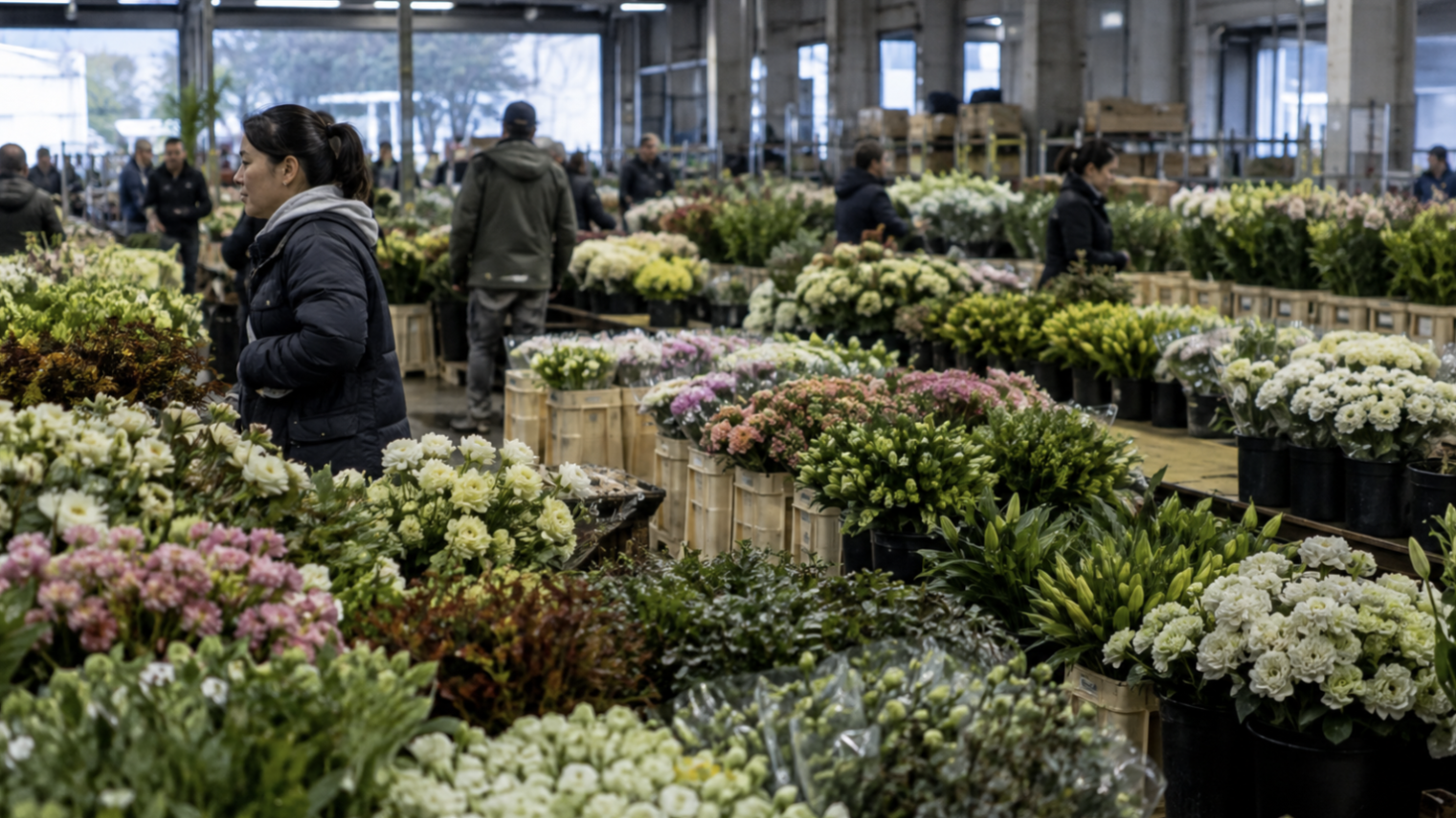
In 2023–24, Australian cut-flower production was valued at $289.9 million. Victoria accounted for the majority of national production, with flowers also grown commercially in Western Australia, South Australia, Queensland, New South Wales and Tasmania. DAFF notes that Australian flowers are grown year-round across glasshouses, protected cropping systems and outdoor fields.
That matters because the domestic industry is not simply a small seasonal supplement to imported stock. It represents a substantial production base in its own right, with different growing regions and production systems contributing flowers at different points throughout the year.
Australia also imported $96.7 million worth of fresh cut flowers in 2023–24. The leading source countries were Malaysia ($22.6 million), Kenya ($17.8 million), Ecuador ($15.5 million), China ($10.7 million) and Colombia ($9.9 million).
Put those two figures together and the picture becomes more interesting. On the latest official value data, domestic production represents roughly three-quarters of the combined value of Australian production and fresh-flower imports, with imports making up roughly one-quarter. That is not a measure of every stem sold to Australian consumers — the figures use different statistical categories and should not be treated as a precise market-share calculation — but it is a useful indication of the scale of the two supply streams.
For florists, the important point is not whether local or imported flowers are “winning”. It is that the two supply streams give the market different ways to respond to availability, seasonality, variety and demand.
Local production can provide access to flowers suited to Australian growing conditions and to the timing of domestic seasons. Imported flowers, meanwhile, allow Australian buyers to access production from major international growing regions and can broaden the range of varieties available to the market. DAFF’s current import framework permits approved species from approved countries, subject to biosecurity requirements.
That combination helps explain why a florist’s buying decisions can change quickly from week to week. A flower may be locally available in one period and harder to source later, while imported product can provide another route to supply. The reverse can also be true when international freight, crop conditions or border processes affect availability.
The concentration of production and wholesale infrastructure is another part of the story. The National Flower Centre in Melbourne says Victorian growers contribute approximately 40 per cent of Australia’s cut flowers. It has more than 60 growers and wholesalers, 152 permanent stands and attracts more than 650 floristry businesses on its key trading days.
That gives the Australian market a strong physical hub, but it does not mean every florist experiences the same supply conditions. Local growing regions, wholesale access, freight distances and the product mix available through individual suppliers can all shape what is realistically available to a business.
The useful lesson is to think of the flower market as a network rather than a single source of supply. When planning a product range, it is worth knowing which flowers are strongly tied to Australian production, which commonly rely on international supply, and which can move between the two depending on the time of year.
That knowledge can make purchasing conversations more productive. Instead of treating availability as a simple yes-or-no question, florists can ask where a product is coming from, how stable that supply is likely to be, what alternatives exist, and whether a locally grown substitute could achieve a similar design result.
Australia’s flower market does not have to choose between local and imported flowers. The latest official data suggests both are significant parts of the supply system, with Australian growers providing the larger share by production value and imports adding another layer of variety and supply resilience.
For florists, the takeaway is straightforward: understanding where flowers come from is becoming as useful as knowing what is in season. The better a florist understands the supply chain behind a stem, the easier it becomes to plan ranges, manage substitutions and make confident buying decisions when the market moves.
1. Department of Agriculture, Fisheries and Forestry — Cut flowers and foliage