
Return to blogs
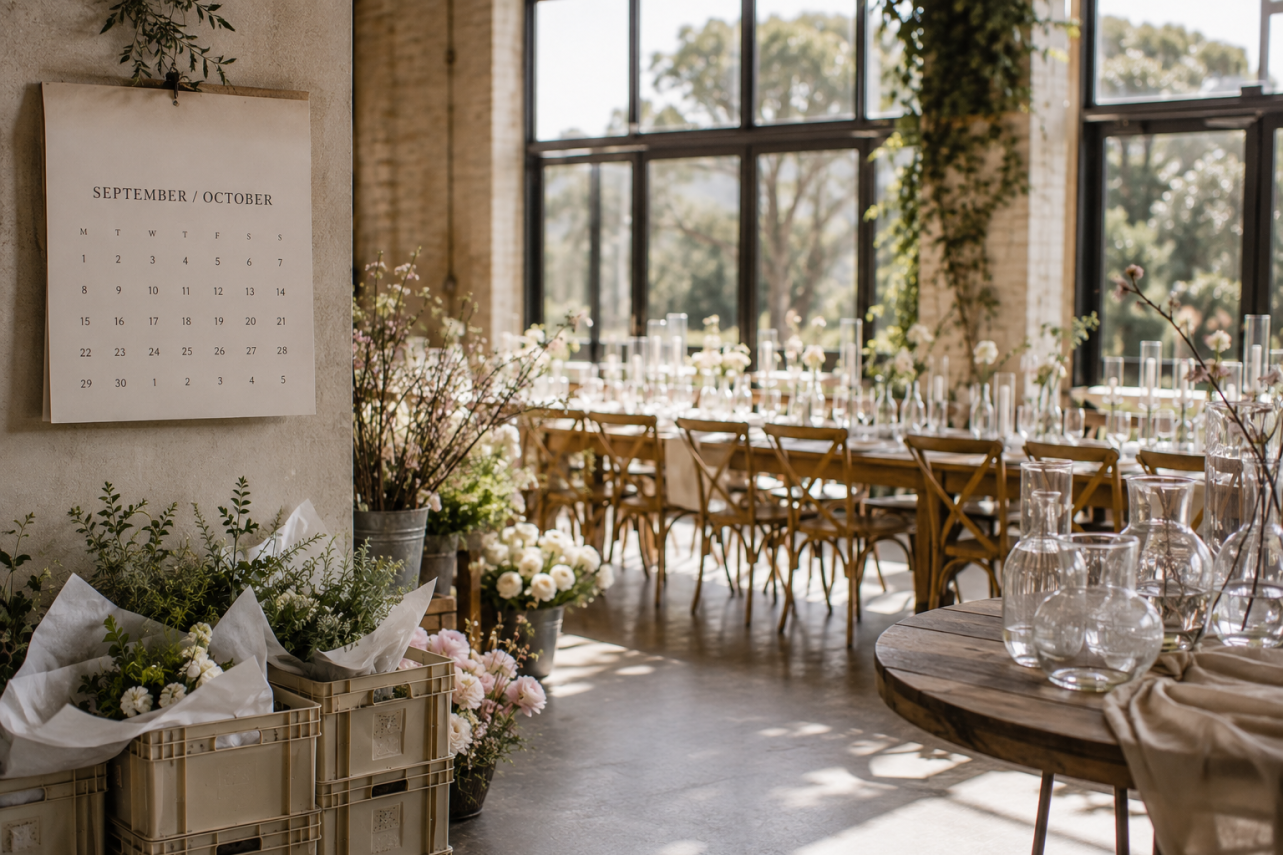
Spring begins next week, and for many Australian florists that means something more significant than a change in the calendar.
It marks the start of one of the industry's busiest wedding periods.
The 2026 Easy Weddings Annual Wedding Survey found that spring and autumn remain the two most popular wedding seasons, together accounting for more than two-thirds of weddings planned for the year. September accounts for 10% of weddings in the survey, while October accounts for 17% — making October the most popular month in the 2026 data.
For florists, the significance of spring weddings is not simply that more seasonal flowers become available.
It is that several pressures can arrive at once: more enquiries, more consultations, more custom design work, larger installations, tighter delivery windows and greater demand for particular seasonal varieties.
That makes the end of August a useful planning point. A florist does not need to wait until the first warm weekend of September to discover that the next two months are already full.
The Easy Weddings survey provides a useful picture of the year ahead. Spring and autumn together make up more than two-thirds of planned weddings, and 47% of couples say their preferred season is the primary factor in choosing a wedding date. That is ahead of venue availability, a special date, a quirky date or the availability of a specific vendor.
That matters because it suggests seasonality is not merely a florist's internal planning issue. It is part of how couples are making the original decision about when to marry.
The latest ABS marriage data, released in July, recorded 118,804 marriages in Australia in 2025. That was 1.7% lower than 2024, but broadly similar to 2023 and well above the unusually low levels recorded during the first two pandemic years.
The numbers do not provide a forecast of florist demand, but they do show that the Australian wedding market remains large enough to be commercially significant for businesses offering wedding flowers.
Spring also gives florists a different product story to work with.
Recent Melbourne seasonal guides identify flowers such as ranunculus, anemones, sweet peas, tulips, hyacinths and early spring roses among the blooms associated with the September-to-November period, although exact availability varies with weather and grower supply.
That variability is important. Seasonal flowers can create a strong point of difference, but promising a specific variety too far in advance can create unnecessary pressure when nature does not cooperate.
Check the calendar before checking the flower list.
Look at September, October and November wedding dates as one operating period rather than as individual jobs. Where are the weekends that already have multiple deliveries or installations? Which dates require early-morning access? Which jobs need refrigeration, additional staff or a second vehicle?
Then review your seasonal substitutions.
If a couple has requested a particular spring flower, make sure your consultation process explains the difference between a requested variety and a seasonal design brief. A couple may care about the feeling, colour and shape more than the exact cultivar once the distinction is explained.
Finally, look at capacity.
The busiest wedding dates are not necessarily the most profitable if the business has to stretch staffing, delivery and installation resources too far. A full calendar is useful only if the work can be delivered at a margin that makes the pressure worthwhile.
There is a broader lesson in the 2026 wedding data.
Couples are increasingly choosing dates around personal preference, with seasonality identified as the leading decision factor in the Easy Weddings survey. For florists, that means the seasonal calendar is not simply something to react to once enquiries arrive. It can influence demand months before the flowers themselves appear.
The opportunity is therefore to treat spring as a planned trading period: understand which dates are likely to be pressured, know which seasonal flowers are realistic, and make the business's capacity clear before the diary becomes crowded.
Spring wedding season does not need another generic reminder that flowers are beautiful this time of year.
What florists need is a clearer operating plan.
With October representing 17% of planned 2026 weddings in the Easy Weddings survey and spring remaining one of the two dominant wedding seasons, the next few weeks are a good time to look at the diary, supplier expectations, substitution policies, delivery capacity and staffing before the pressure peaks.
The best spring preparation may have less to do with what flowers you can buy — and more to do with how many weddings you can deliver well.
• Easy Weddings — Annual Wedding Survey 2026
• Australian Bureau of Statistics — Marriages and Divorces, Australia, 2025
• Kate Hill Flowers — What Flowers Are in Season in Melbourne
• Ripple Studio — A Month-by-Month Guide to In-Season Wedding Flowers in Melbourne